
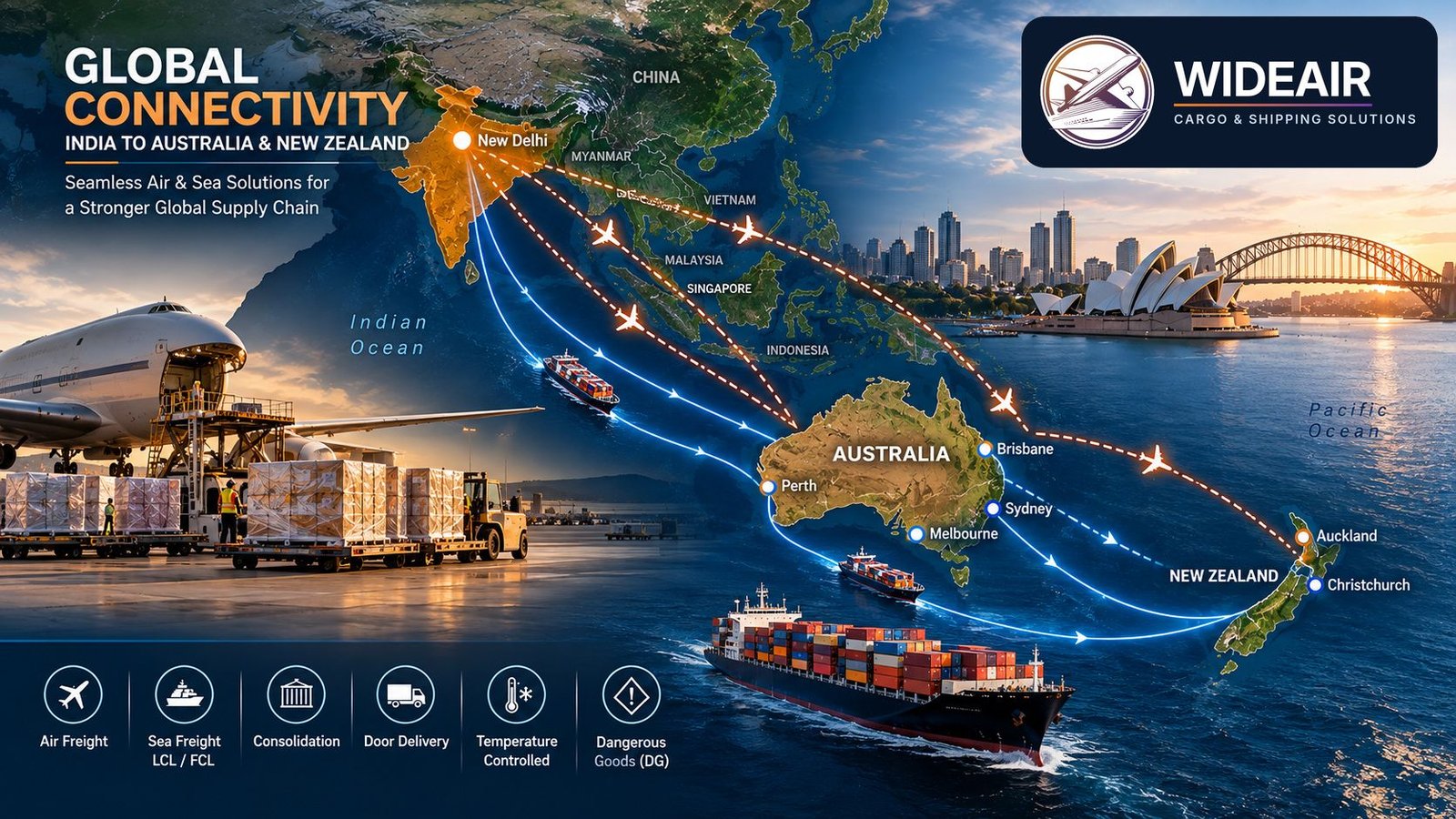
Air, sea and door delivery
Air freight
Suited to urgent, high-value and time-sensitive cargo that needs faster transit and close milestone coordination.
Sea freight
FCL and LCL options for regular commercial cargo, larger volumes and cost-sensitive movements.
Door delivery
Destination customs coordination, warehousing or final delivery can be added, depending on shipment terms.
Warehousing & distribution
Cargo can be received, held and distributed within the destination market through local partners.
What to prepare for Australia and New Zealand
Both countries enforce strict biosecurity requirements. Timber packaging such as pallets and crates must be treated and marked to ISPM 15, and certain goods, such as food, plant and animal products, wooden items and used equipment, face additional inspection or may be restricted. Containers must be clean on arrival.
Australian and New Zealand customs also require accurate commercial documentation and correct classification. Goods and services tax and duties are assessed on import, and the party responsible depends on the Incoterm you agree.
What we coordinate
- Air freight and FCL / LCL ocean freight from India
- Regular consolidation and sailing coordination
- Documentation support and import clearance through local partners
- Warehousing, distribution and door delivery in the destination market
- Specialised cargo, subject to acceptance and destination rules
How a shipment to Australia or New Zealand moves
- PlanMode, terms, packing and biosecurity checks.
- ShipPickup, export clearance and international leg.
- ClearImport clearance and inspection if applicable.
- DeliverLocal delivery or warehouse handover.
Good to know
Frequently asked questions
Do wooden pallets need treatment?
Yes. Wood packaging material must be heat-treated or fumigated and carry the ISPM 15 mark. Untreated wood can lead to refusal, re-export or costly treatment on arrival.
Can you deliver to inland addresses in Australia?
Yes. Local agents and carriers can complete delivery beyond the arrival port or airport, depending on the cargo and address.
Should I choose air or sea?
Air for urgent, high-value or time-sensitive goods, sea for larger and regular volumes where lead time is flexible. We can compare both against your deadline and budget.