
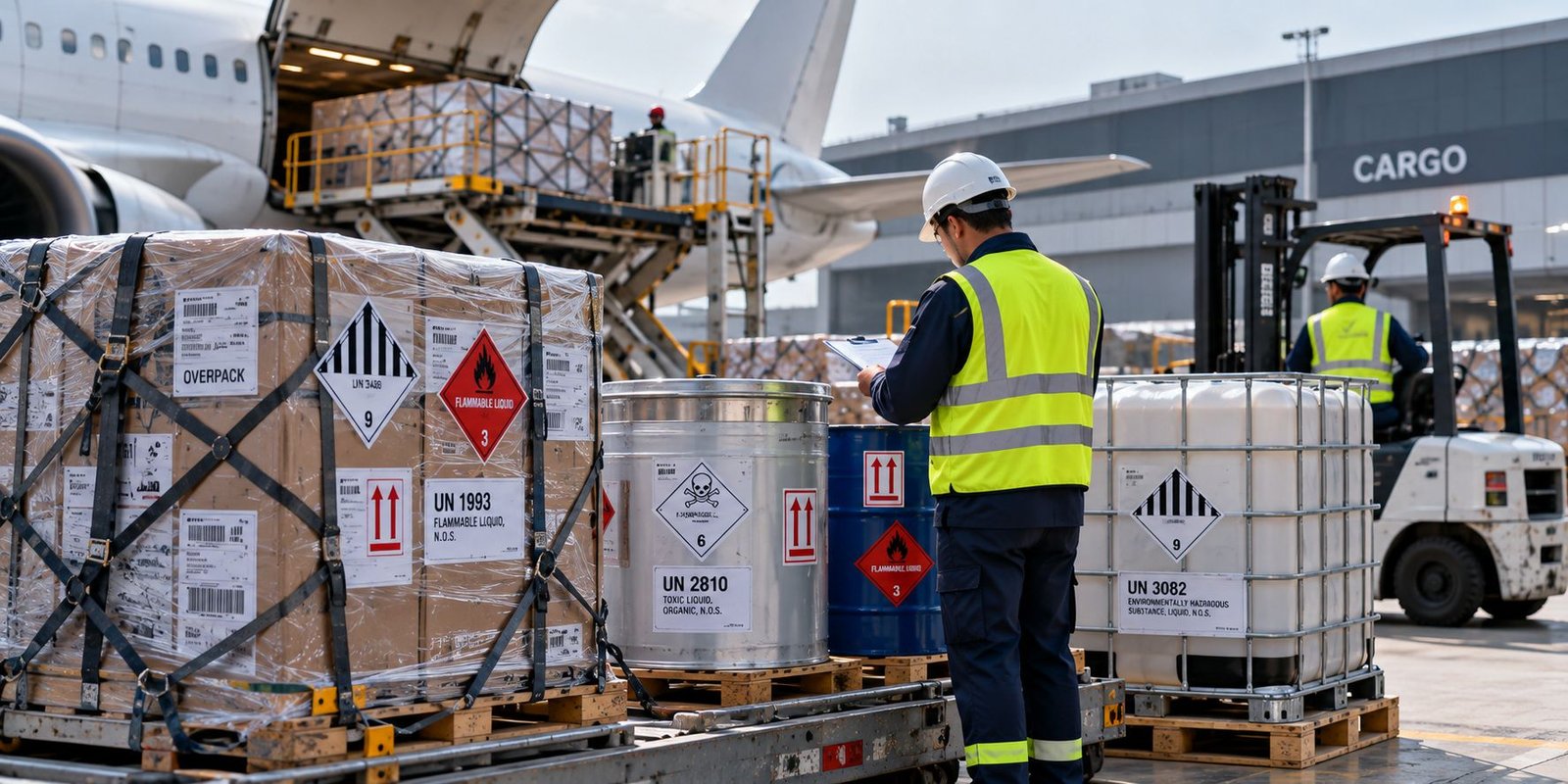
Every DG shipment starts with the same question
What exactly is in the package? Dangerous goods are regulated by class, UN number, proper shipping name and packing group. For air transport, the governing standard is the IATA Dangerous Goods Regulations, which are aligned with the UN Model Regulations and apply on top of airline-specific variations.
Acceptance is never automatic. It depends on the exact classification, packing instruction, quantity, packaging, marks and labels, documentation, carrier policy and route. We review those details before we recommend a routing.
The nine hazard classes
| Class | Hazard | Examples |
|---|---|---|
| 1 | Explosives | Fireworks, ammunition |
| 2 | Gases | Aerosols, compressed and refrigerated gases |
| 3 | Flammable liquids | Paints, solvents, adhesives, perfumes |
| 4 | Flammable solids | Matches, certain metal powders |
| 5 | Oxidisers and organic peroxides | Bleaching agents, some fertilisers |
| 6 | Toxic and infectious substances | Pesticides, diagnostic specimens |
| 7 | Radioactive material | Certain medical and industrial sources |
| 8 | Corrosives | Acids, batteries with liquid electrolyte |
| 9 | Miscellaneous | Lithium batteries, dry ice, magnetised material |
What we need before routing
- UN number and proper shipping name
- Hazard class (and subsidiary risks) and packing group
- Quantity per package and total quantity
- Packaging type and specification marks
- Safety Data Sheet (SDS) and, for batteries, test summary where applicable
What we coordinate
- IATA-compliant coordination and documentation support, including the Shipper’s Declaration for Dangerous Goods where required
- Packaging, marking and labelling coordination so the package matches the applicable packing instruction
- Booking with airlines or other carriers after review of the cargo details
- Air and multimodal planning, including pickup and delivery
- Lithium batteries, e-commerce goods and other commonly shipped DG, subject to classification and carrier policy
How a DG shipment moves
- ClassifyConfirm UN number, class, packing group and quantity.
- Pack and labelCompliant packaging, marks and labels.
- DeclarePrepare declaration and transport documents.
- BookCarrier acceptance and booking, then movement.
Good to know
Frequently asked questions
Can all dangerous goods be shipped by air?
No. Some items are forbidden on aircraft under any circumstances, and some are accepted only on cargo aircraft or in limited quantities. Carriers can also set stricter rules than IATA. We check acceptance before you pack.
Are lithium batteries dangerous goods?
Yes. Lithium-ion and lithium-metal batteries, whether shipped alone, packed with equipment or contained in equipment, are regulated and need correct classification, packing and marking.
What is a Shipper’s Declaration for Dangerous Goods?
It is the legal document in which the shipper certifies that the consignment has been classified, packed, marked and labelled in accordance with the regulations. It must be accurate and signed by a trained shipper.
Can you ship dangerous goods by sea?
Yes. Sea transport follows the IMDG Code and has its own declaration, packing and stowage rules. We coordinate sea DG on request and confirm carrier acceptance.