
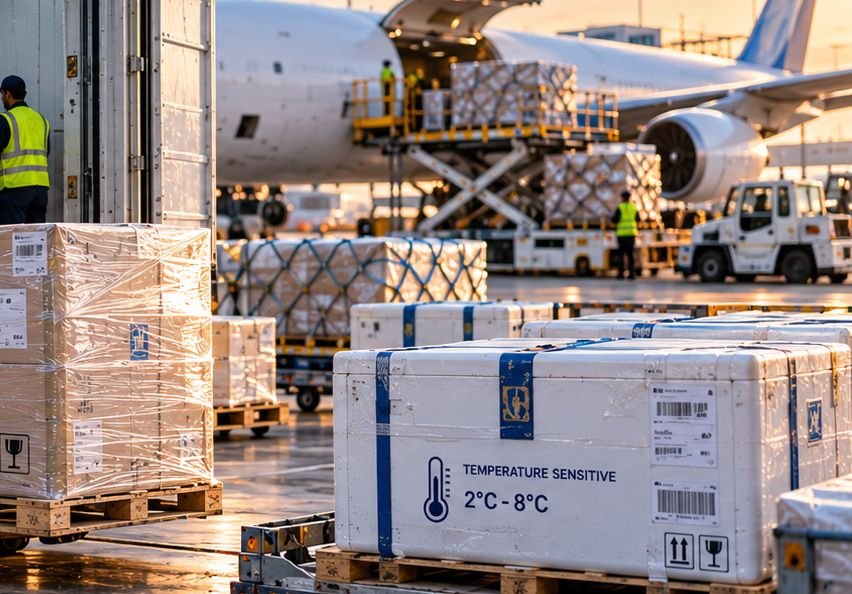
Cold chain is a plan, not a booking instruction
A temperature requirement on a booking does not keep a product in range by itself. Stability depends on how the shipment is packed, how long the journey is, how many times it changes hands, and what happens if a flight is delayed.
Wideair coordinates the movement as a whole. We review the product’s temperature range and stability limits with you, then choose packaging, routing and handover arrangements accordingly, with each party briefed on what the cargo needs.
Temperature ranges we plan for
2°C to 8°C
Vaccines, many biologicals and other refrigerated pharmaceuticals. Packaging can be active or passive, chosen against the route duration and ambient conditions.
-15°C to -25°C
Frozen products. These need extra attention to packaging endurance, replenishment options, transfer points and destination handling.
What we coordinate
- Selection and coordination of active or passive temperature-controlled packaging
- Air routing with the fewest practical handovers and clear transfer instructions
- Temperature monitoring and data-logger requirements agreed with the consignee
- Shipping documents, handling instructions and labelling matched to the plan
- Pickup, airport handling, destination clearance and delivery planning
- IVF kits, vaccines, clinical and other specialised medical shipments, subject to destination requirements
Regulatory points to check early
Import rules for pharmaceuticals, biologicals and medical materials differ widely. Many countries require import permits, licences or regulator approvals, and some limit which products can be imported at all. Responsibility for these permissions normally rests with the shipper and consignee, and checking them before booking avoids shipments being held at the border.
We work to Good Distribution Practice (GDP) principles of control, documentation and traceability, and tell you what we need from you to do that properly.
How a temperature-controlled shipment moves
- SpecifyProduct, range, quantity, route and tolerance.
- DesignPackaging, routing, monitoring and contingencies.
- ExecutePacking check, pickup, airline handover and tracking.
- DeliverDestination release, logger data and handover.
Perishable cargo: shelf life sets the plan
Fresh produce, flowers and other perishables lose value every hour they spend in the wrong conditions, so the route is chosen backwards from the end of shelf life. We start with the commodity, its safe temperature range and how many days it has once harvested or produced, then decide whether air or temperature-controlled sea freight is viable.
Pre-cooling, packaging, palletisation and the interval between pickup, cargo acceptance and departure matter as much as the transport mode. Plant products typically need a phytosanitary certificate, and certain agricultural and processed food exporters in India may need APEDA registration. Importing countries set their own rules, and we tell you what we know to be needed for the lane.
Share the harvest or production date, required arrival date and temperature range when you ask for a quote. Last-minute information is the most common cause of missed flights.
Good to know
Frequently asked questions
Can you ship vaccines and IVF materials?
Yes, subject to the product’s temperature requirement, packaging, carrier acceptance and the import rules of the destination country. Contact us with the product details so that we can review feasibility first.
Do you provide temperature monitoring?
Monitoring and data-logger requirements are agreed as part of the plan and coordinated with packaging and the consignee. Tell us what proof of temperature you need.
What happens if a flight is delayed?
Packaging is chosen with a safety margin for the route duration, and handover points are briefed in advance. If a delay threatens the temperature window, we contact you immediately to agree the next step.
Which perishable goods can you ship?
Fresh produce, flowers and other temperature- or time-sensitive goods, subject to airline acceptance, packaging and destination regulations. Tell us the commodity and we will confirm what is feasible.
Is air freight the only option for perishables?
Air is the usual choice for goods with a short shelf life. Longer-life products can sometimes move by temperature-controlled sea container, which costs less but takes longer.
Is pharmaceutical shipping regulated?
Yes. Regulation covers the product, the packaging, the documentation and the importer. Because rules differ by country, we recommend confirming import permissions with the consignee early.